In Madagascar, Tojo, a bat catcher who works for scientists, searches for a lost journal his ancestors wrote during the French colonial repression.
As the nation rises up against the corrupt government, Tojo must descend into sacred caves to find answers to his past and hope for the future.
Only through ritual will he return.
Co-created with bat catchers, scientists, and artists in Madagascar, this film centers around a Malagasy bat catcher Tojo and his family, blending traditional storytelling with contemporary science.
This film gives voice to the uncredited and overlooked wage laborers and citizen scientists worldwide who, like Tojo and his bat catching team, form the bedrock of scientific research.
The Story
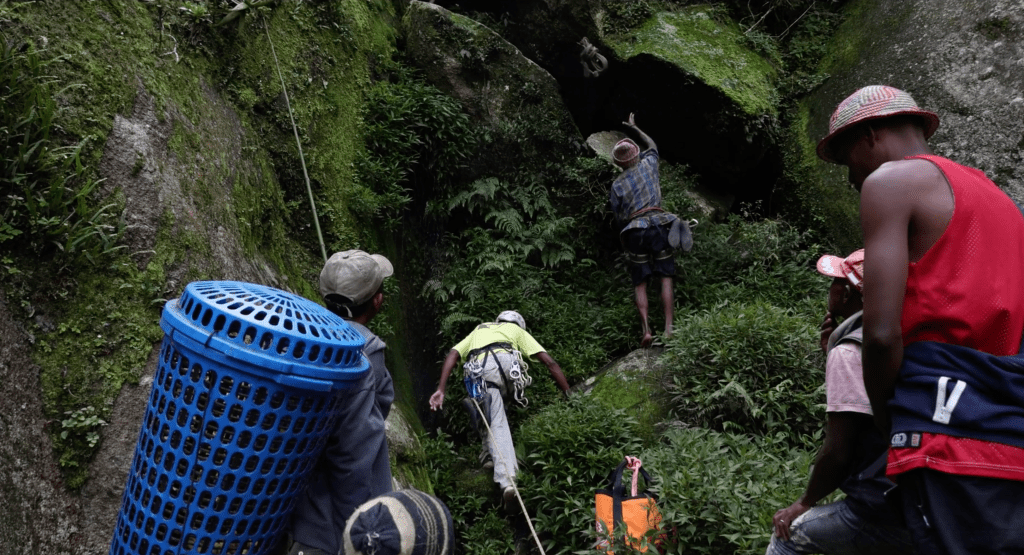
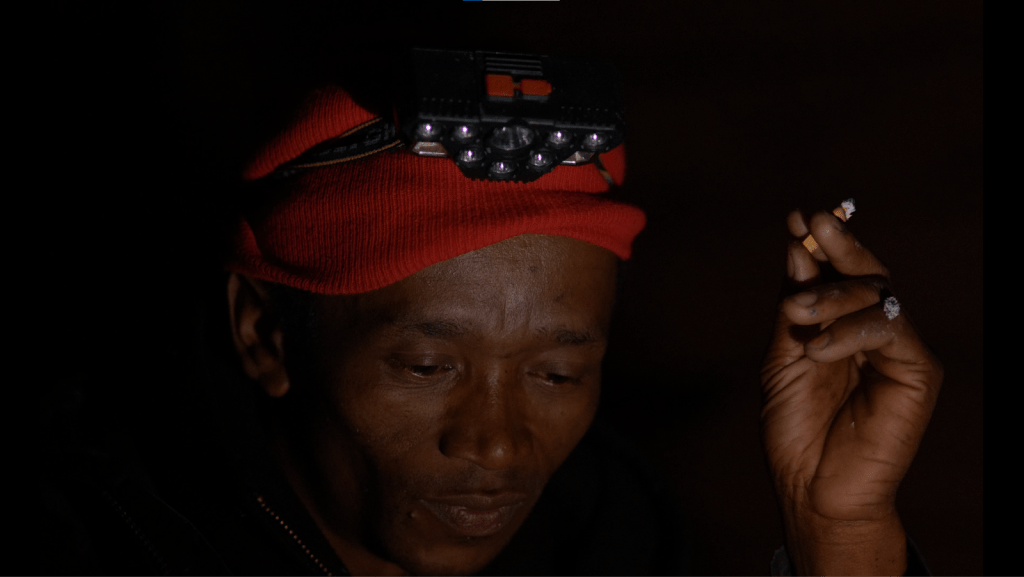
Tojo is a charismatic leader and performative storyteller. At first glance, Tojo’s life appears to be typical. He farms rice for food, fells trees for building, and tends his family of five. By night, however, he risks his life catching disease-riddled bats for scientists – a vital income source amid worsening droughts.
When agricultural fires disrupt local bat populations, and GEN Z Protests erupt in the capital city, Malagasy scientist Angelo enlists Tojo to travel north in search of the elusive Eidolon bats before cyclone season hits.
Tojo visits his ailing grandparents for a customary blessing, but instead receives a parallel mission: to track down his great-grandfather’s diary, their only recorded family history.
When Tojo learns the diary is with a cousin in the north, he sees an opportunity to combine his duties: to search for both the book and the bats.
Your contributions can help! We’d love for you to join us on this project by supporting.
For US donors: Donations made through CID are tax deductible! Help us save on fees and send via check. See the donate link for instructions.
By supporting this film you are supporting
Malagasy Communities
By supporting this film you are directly supporting Malagasy communities in Marozevo, Andrafiabe, Analasoa and Anevoka. Support for this project goes directly into the economy of these small local communities: wages for guides, purchases at the market, hiring a mechanic, meals at restaurants, camping permits, a cook for camp, and more.
Frontlines of pandemic-prevention
Since the pandemic, people across the world began to learn about the importance of disease prevention work. But what does this work really look like? This film helps elucidate zoonotic disease studies: how scientists study the viruses that may pass from animals to humans, what they sacrifice for this work, and just how essential it is.
Malagasy filmmakers
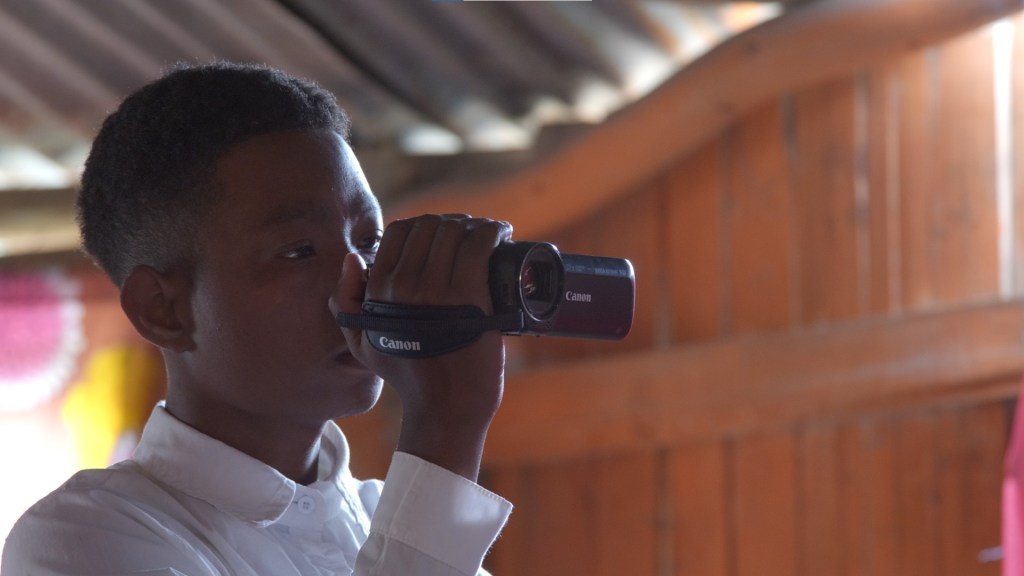
The majority of the crew on this film is Malagasy. Funding and support for this film goes directly to these artists, giving them a chance to work on an independent film in some cases for the first time. We will also be running filmmaking workshops in Madagascar led by Michaël, Miandra and Erik in tandem with local screenings.
Biodiversity and Environment
Madagascar is home to thousands of unique animals found nowhere else in the world but it is facing increasingly frequent and devastating cyclones, fires, droughts, and massive economic pressure. This film raises awareness for the risks facing this incredible unique biodiversity of the island by illuminating the local citizens and scientists working to save them.
Credit early career- and citizen- scientists
This film highlights the massive role of the under-recognized and underpaid wage laborers (the bat catchers) as the bedrock of field science. Citizen scientists like Tojo and his bat catchers are essential to field science worldwide and deserve more recognition for their work and the knowledge they hold, and we hope this film will galvanize this needed conversation at a time when environmental and animal studies are so essential.
Climate crisis resilience
This film highlights the interconnection between science, environment, spirituality and family. It also highlights the climate vulnerable villages of Madagascar. Cyclones, droughts and general unpredictability threaten water availability, crops and health in Marozevo and the other villages we film in. Not only do funds for this film go to support these villages as they manage these difficulties, but it will bring awareness to how these events affect them and what help they need.
Want to know more about bats? Click here!
Bats are essential to our ecosystems, but pose serious health risks –
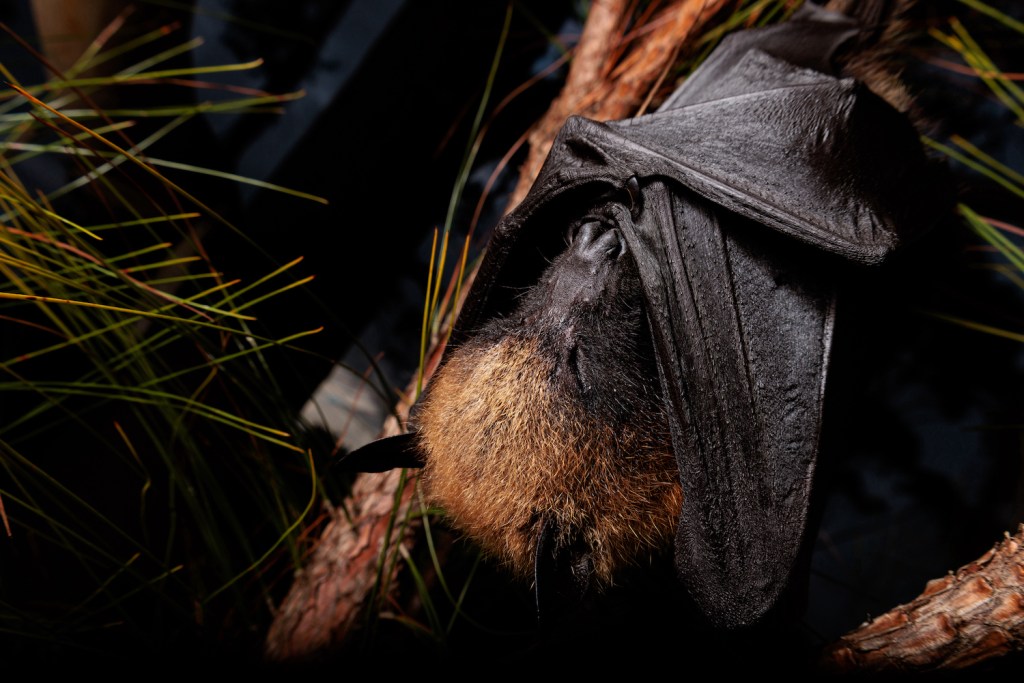
Madagascar’s endemic fruit bats are essential seed dispersers and pollinators, but they are also associated with viruses similar to Ebola, Marburg, and Hendra. Deforestation and climate change are shrinking habitats for bats and increasing their proximity to humans, heightening the risk of disease spillover in one of the world’s most climate-vulnerable populations.
Why are bats associated with diseases? In short, bats have unique life history traits that make them particularly good hosts or reservoirs for viruses that are particularly damaging to humans (like Ebola, Marburg, Hendra, etc.) Bats, as flying mammals, have high metabolic rates, uniquely long lifespans for their size and high body temperatures. These conditions together have cultured a unique and strong immune system that allow viruses to replicate in their systems for long periods of time typically without presenting symptoms. This mix allows for very virulent viruses to emerge from bats.
Bat Fun Facts
There are bats that eat mosquitoes, nectar, frogs, fish, fruit, blood, seeds, lizards, and more!
They are the reason we have tequila! As a crucial pollinator of the agave plant.
Some can echolocate, some can see colors!
There are 1400 species of bats worldwide.
Bats can be found in nearly every country on earth!
Bats live in every ecosystem besides desert or tundra.
Want to learn more about the film?
How this project started
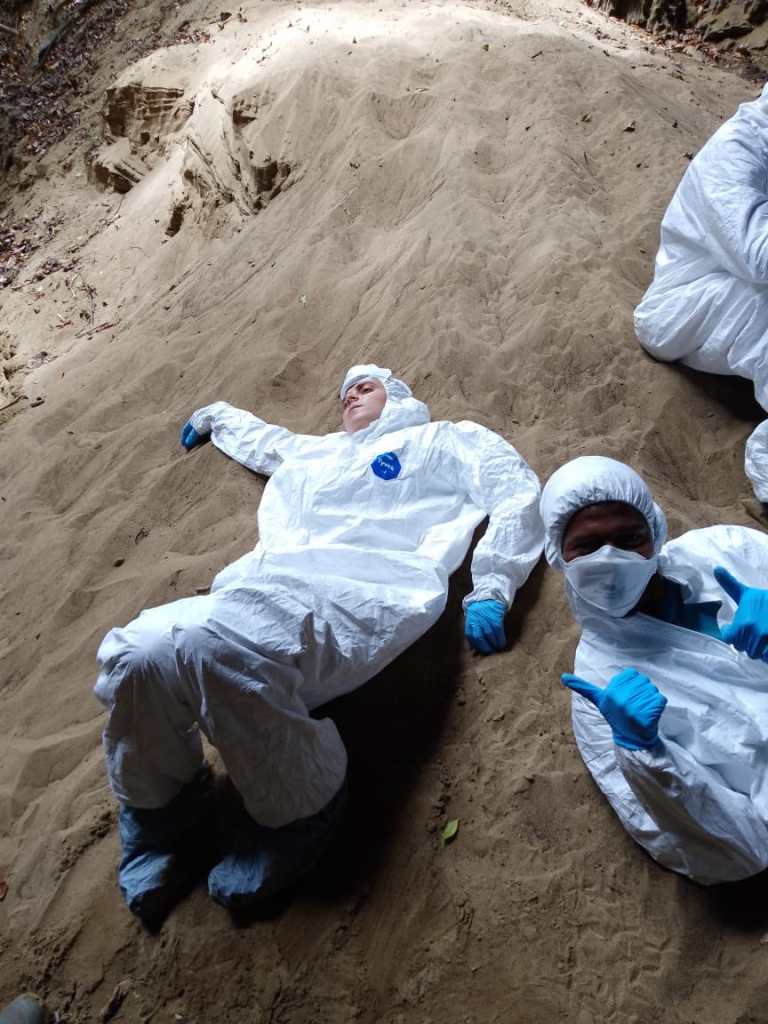
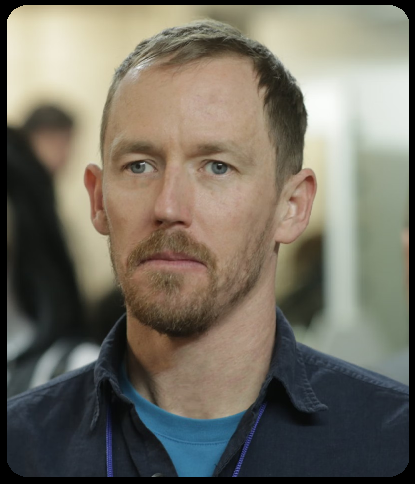
Hello! Kendall here – I originally trained as a mammalogist and spent much of my time chasing down, trapping and releasing mammals. In 2022 I moved to Madagascar to study bats with a disease ecology lab made up of Malagasy and American scientists. (Angelo and I are taking a break from processing on a hot day in this image.) I was ecstatic – bats are what originally inspired me to get into biology. But whilst I came for the bats, for the last four years I’ve stayed for the Malagasy people I work alongside.
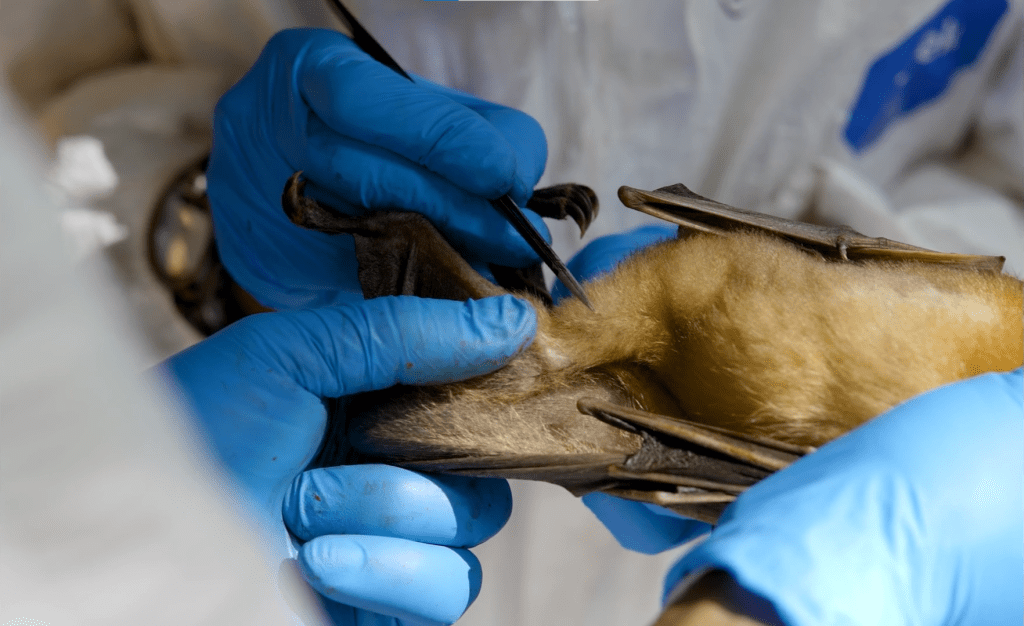
Our team of scientists and bat catchers travelled the country tracking down bats that weigh half a kilo and have a wingspan of one meter. Each day we’d make camp, set nets, sample, swab and draw blood. This type of science is done all over the world to track population health, especially now as the risk of zoonotic disease spillover increases with the climate crisis.
But most people don’t know what this work really looks like, who it relies upon, or just how difficult it is. That’s what inspired me to document it. I shared my idea with Angelo and Tojo who were excited to share their story too! I had worked with Erik on a film with similar environmental and anthropological themes before so we invited him to join our team. Once Erik arrived in Madagascar and integrated into our team, the film truly began to develop.
Angelo, Erik and I spent a week apart from the lab traveling to the villages we catch bats in and speaking intently with Tojo, Dadah and other bat catchers about this storytelling idea. The camaraderie, bonding, and shared ideas on this trip went beyond just our interest in the topics like science-cultural communication and became a true creative collaboration. This moment was the genesis of the film.
Story summary
In the bustling rural village of MAROZEVO, Madagascar, we meet TOJO, a charismatic leader and performative storyteller. At first glance, Tojo’s life appears to be typical. He farms rice for food, fells trees for building, and tends his family of five. By night, however, he risks his life catching disease-riddled bats for scientists – a vital income source amid worsening droughts.
When agricultural fires disrupt local bat populations, Malagasy scientist ANGELO enlists Tojo to travel north in search of the elusive Eidolon bats before cyclone season hits. Tojo visits his ailing grandparents for a customary blessing, but instead receives a parallel mission: to track down his great-grandfather’s diary, their only recorded family history. When Tojo learns the diary is with a cousin in the north, he sees an opportunity to combine his duties: to search for both the book and the bats.
What begins as a journey for work becomes a search for the book. Bats remain present throughout his pursuit, revealing themselves in myths, on menus, and in the attics of Tojo’s long-lost relatives. Tojo’s relatives give devastating news: the book is lost, but through dialogue, fading memory flickers back to life. Tojo learns that his great-grandfather hid amongst bats in the forests and caves to escape forced labor by the French colonists. Meanwhile, when their car breaks down, Angelo educates children about how bats maintain the forests; why bats are associated with so many deadly diseases; and why his team sacrifices so much to study them. Tojo’s quest for the book deepens as the journey leads them to the sacred bat caves of ANKARANA, where civil war evacuees once sought refuge.
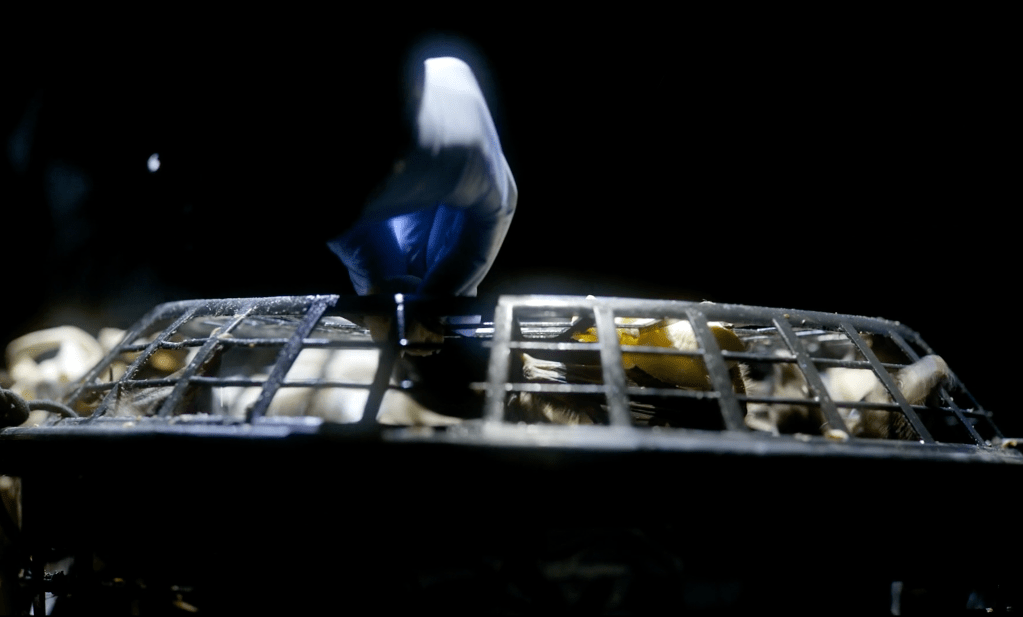
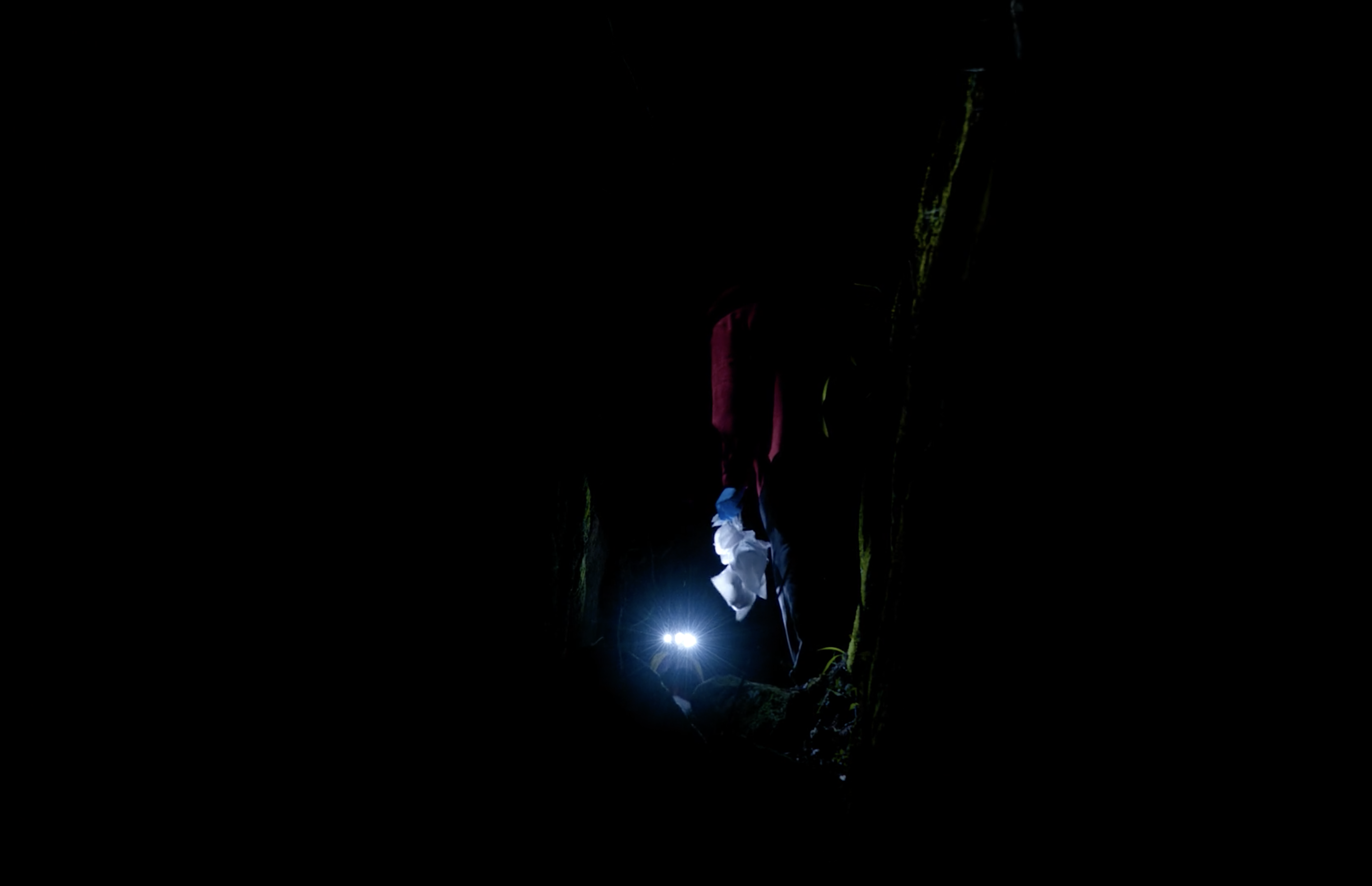
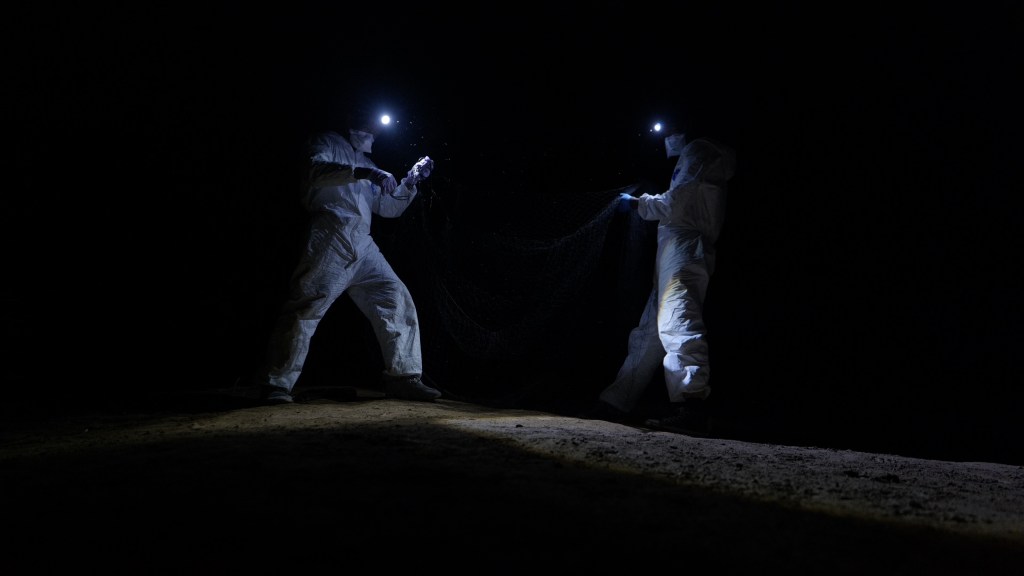
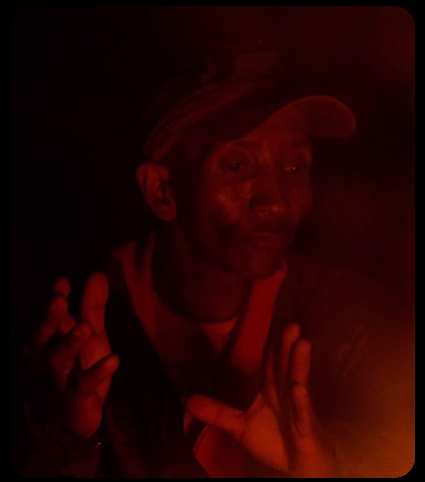
As darkness falls in the caves of Ankarana, the team finally catch bats in their nets. Suddenly, a harsh cry is heard in the night. Fidy, one of the catchers, has fallen. Around a tense fire, the group conjectures about what happened. Was it his low blood pressure? Was he drinking? Did they anger the cave spirit? The group’s loyalties are put to the test.
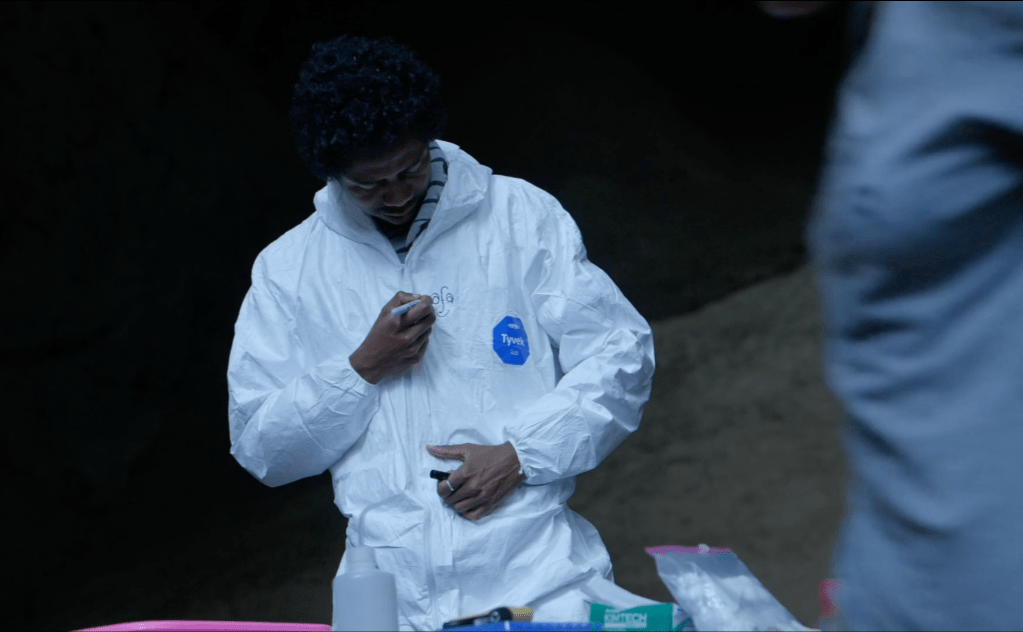
The next day, the team processes the bats at the foot of the cave – collecting blood, swabs, wing punches, and measurements – before releasing the bats. Tojo steps away when he receives a phone call. His grandfather has passed.
That afternoon the team decides they must appease the spirit of the cave. Tojo enters the spirit cave and performs a ritual to apologize to the spirit on the team’s behalf.
As he prays, outside the rain begins to fall. It builds. A storm is coming.
Back in the village, a young boy watches the cyclone, waiting for his father to return.
Collaboration
Our team of scientists, filmmakers and bat catchers who have been living and working together on this film in Madagascar over the past 4 years.Two of our producers are scientists who have/are studying bats in Madagascar: Kendall and Angelo. Our protagonist Tojo represents the un-credited Malagasy wage laborers who make research possible. Erik and Michaël, our co-DPs, are our resident artists and filmmakers – guiding the cameras, story and joining us through all the steps of bat-catching.
Thus our filmmaking team directly conducts and embodies the work which our film is documenting. We aim to move away from extractive practices and contribute toward the decolonization of our disciplines. For our team, this means sustained immersion and consistent, transparent communication with the entire team as we make this film with our participants, not just about them. During filming, we discuss daily plans, talk through ideas, share stories, give critiques, and share feedback each day as a team. In post-production, we will be sharing cuts of the film for feedback with all of our collaborators and protagonists. Everyone’s opinons and preferences are equally valued.
Our artistic approach
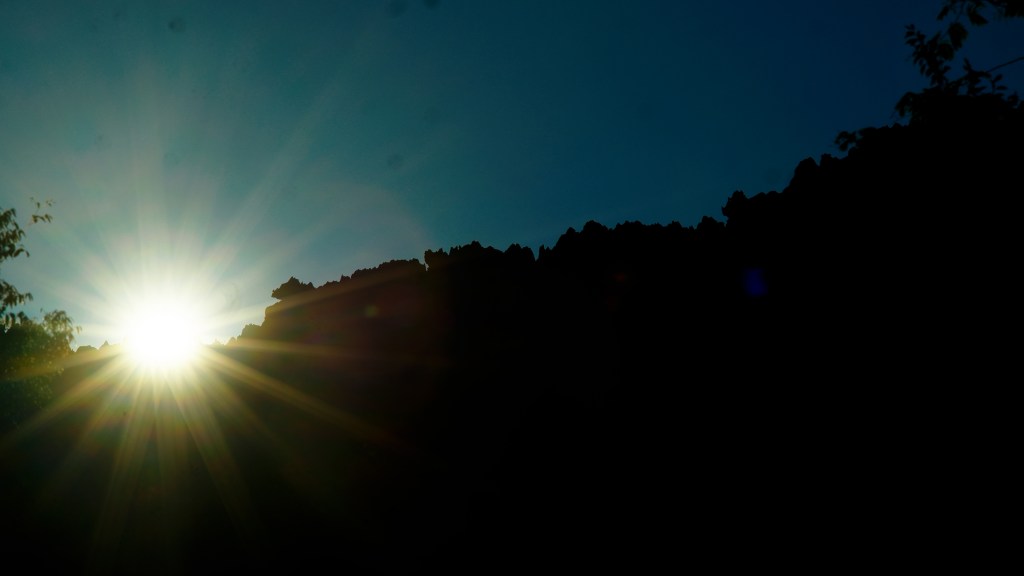
Our vision for the film is for it to feel as immersive as the filmmaking process and bat catching experience is. We want the audience will feel the pace of field work in Madagascar which involves long periods of waiting punctuated by sudden flurried activity, to feel the lab as disorienting and draining followed by the relief of stepping out into the sun, and to experience the way myth, history and reality blur in this environment.
Our approach incorporates both spontaneously filmed encounters and loosely scripted scenes co-written with the bat catchers. Our camera is intimately part of their experiences, moving with them.
We do not use sit down interviews but rather we share information through Malagasy storytelling – using long takes which respect the temporality of such stories. Sequences in the lab are intentionally overexposed and blanketed by the cold constant hum of machinery. The film immerses into attempts to remember Tojo’s family history throughdevices inspired by fiction. Dreamlike sequences and transitions with shallow focus question the line between reality and fantasy. Flashes of childhood memories are filmed with the protagonist’s children reenacting their parents’ childhood memories.
But when the bats are caught and processed we film from the bats POV, looking up at the human, disorientated, blurry and unsteady. What the viewer experiences is not the human observing the bat but the bat observing the humans: giant, alien-like in white suits, looming over us.
To complete the immersive feeling of the film, we prioritize sound with intentional use of negative and nonvisual space. Rich Atmos mixed soundscapes, recorded with ambisonic mics, come to the forefront: dramatic vehicles for intrigue into the bat’s perception of the world and the team’s experience of the caves/forest at night.
We’ve all seen and experienced the disaster that can erupt from a deadly viral zoonotic spillover – the early 2000s SARS outbreaks, the Ebola outbreaks, and potentially the most recent pandemic that affected us all. The likelihood of disease spillover is increasing with climate change and human destruction of habitat. Though most of us don’t realize this – our safety, economic security, and well-being depends on disease surveillance citizen scientists like Tojo, and it is more important than ever that they have our support.
Due to indirect effects of climate change and this deforestation, the habitat for Madagascar’s 40 bat species is rapidly disappearing, while USAID lists the Malagasy as one of the top 10 most climate vulnerable populations on earth. Shrinking environments has led to closer and more frequent proximity of these two populations, which in turn means a greater risk of spreading diseases.
Bats host the most virulent zoonotics in the world, including filoviruses (including Ebola and Marburg), coronaviruses (MERS, SARS, SARS-CoV-2) and henipaviruses (Nipah, Hendra). The Malagasy fruit bats that Tojo catches and Angelo studies are known to have henipaviruses and filoviruses. These bats seems to shed more viruses during the resource-poor dry winters, which coincides with the bat hunting season when humans hunt, sell and eat bats as a protein alternative. This conflict poses a serious threat to local bat populations, and potentially to the humans as well if there is a spillover event.
Fruit bats serve vital roles in the ecosystem as pollinators and seed dispersers for over 40 fruiting trees in Madagascar. In a time when the villainization of bats is common, we feel compelled to highlight the crucial roles that bats play in local ecosystems.
Tojo and his companions, like citizen scientists worldwide, rely on a stable climate and habitat not only for their own food and regular income, but also for the presence and stability of the species they are paid to work with. Their work often depends on disease research funding, which gives grants to the researchers studying bats, who in turn pay Tojo. With the new funding uncertainties, Tojo livelihood, the fate of the bats, and the risk for disease spillover all become more unstable.
Our Team
Erik Nuding – Director & Co-DP Erik is a UK/American filmmaker who grew up between London and County Sligo, Ireland. At the intersection of slow cinema and sensory ethnography, his work draws attention to the interdependence of life across different species. His debut short film, “An Ornithologist’s Daughter”, screened at Visions du Réel, FidMarseille and DocsIreland among others. Erik has an MFA in Documentary Media from Northwestern and has a BA from the University of California, Berkeley. He has lived in Madagascar on&off since 2022, traveling and living extensively with the bat catching team.
Angelo Andrianiaina – Producer & Protagonist Currently a Malagasy PhD student at the University of Antananarivo, Angelo studies seasonal variation in ectoparasite infestation of two Malagasy fruit bats and the impacts of this variation on the dynamics of infection for vector-borne pathogens, such as Bartonella spp. Angelo co-created this film with Kendall and Erik in early 2022 and has been an integral part of the production team since then, helping with on-the-ground producing, story direction and is a protagonist in the film. He is also a National Geographic Early Career grant recipient.
Michaël Andrianaly – Co-Producer& Co-DP Michaël is a Malagasy documentary filmmaker. His films including “Gwetto” (2023), “Nofinofy” (2019), and “Njaka kely” (2015) have screened at True/False, Visions du Réel, Cinéma du Réel, MOMI and more. Michaël is the recipient of the 2024 True/False True Vision Award. Michaël’s work focuses on underrepresented stories of everyday life and challenges in Madagascar, creating cinematic images that reflect the complex dynamics of life in his home country. He is the Co-DP along with Erik Nuding. Michaël is also co-producing this film with his Madagascar based production company Imasoa Films.
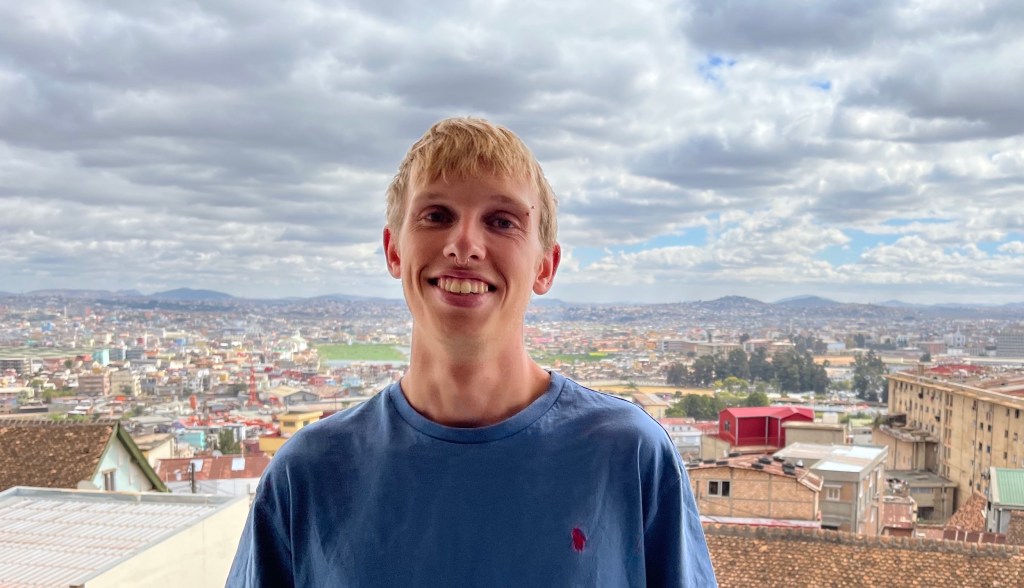
Kendall Fitzgerald – Producer Kendall is an American documentary producer and field biologist who previously worked as a biologist for a bat research team out of Antananarivo, Madagascar, and has continued working in Mada since 2022. She has previously produced 4 short films with Erik Nuding. Kendall has worked at UC Berkeley, the University of Chicago, and the Field Museum of Natural History. She has lived and conducted biological field work in South Africa, Zimbabwe and Malawi. She received a BA in Evolution, Ecology, Organismal Biology from UC Berkeley with a focus in field biology.
Onja Revazaha – Interpreter & Production Assistant Onja is an interpreter with over 10 years of experience working for organizations including the Peace Corp as a language and cross-culture facilitator. She has translated books for CRS Madagascar and worked as an investigator for the World Bank’s SDI education project. She works with the film team as an interpreter and production assistant. This is her first film project but she hopes to do more.
Tojo Ravalomanana – Writer & Protagonist Tojo is a bat hunter turned bat catcher who has accumulated nearly 20 years of citizen science experience by aiding in bat research efforts. He confers knowledge regarding the mythological importance of bats, as well as the historical land use of local forests. Tojo is the team leader of the bat catchers, a passionate hymnal singer, and an accomplished freestyle climber. He will be featured in this film and considered a writer.
Miandra Rasolofoniaina; Assist. Editor, Assist. Camera Operator, Field Sound Recording having originally had a passion for music, Miandra began working as a sound engineer for filmmakers in 2014. These encounters marked a turning point in his career, opening the doors to the audiovisual world. Thus, audio and video became more than just a profession—they became the true expression of his passion. While still producing music, Miandra has since directed, produced and edited pieces for HI, Red Cross Madagascar, Nutri’zaza, Douleurs Sans Frontières and more. Miandra is currently developing a short film for GRET.
Keith Wilson – Executive Producer Keith is a producer and director based in Athens, Georgia, whose films have screened at Sundance, the Berlinale, documenta14, and the MoMA. He is the producer of Joonam (Sundance 2023) and I Didn’t See You There (2022), which won the Directing Award for U.S. Documentary at Sundance and a Film Independent Spirit Award. His live documentary performance Moore for Sale (2023) continues to be staged at festivals, museums, and conferences internationally. Keith is a member of the Academy of Motion Picture Arts & Sciences.
Dadah Randriamanantsoa – Writer & Protagonist Dadah is the co-leader of the bat catching team with Tojo. Dadah is a stoic patriarch of his family and his bat catching team. His home was wrecked in the last cyclone season and he is currently rebuilding using funds from this film and his bat catching efforts. He has witnessed and retells the history of health and wellness in Madagascar over the last 40 years. He will be featured in this film and considered a writer.
Film Teaser
Donate below through The Center for Independent Documentary
Donations made through CID are all tax deductible! Help us save on fees and send via check . . .
Support via check by sending checks made payable to “Center for Independent Documentary” with “WITH THEIR BACKS TO THE SKY” written in the memo line mailed to the below address:









 With Their Backs to the Sky